Everest Base Camp
Meet the man who has to climb the other nine
- Country
- NepalKhumbu Valley, Nepal
- Duration
- 12–14 daysSeason Two
- Grade
- Moderate 2BGet High scale
- Max altitude
- 5,364 m17,598 ft
- Daily activity
- Approx 5–8 hours walking
- Season
- Oct–Nov, Mar–May
- Skill required
- Trekking fitness
- Months on the plan
- One monthof 24 planned
You have been performing a version of yourself for so long that you have lost track of which parts are load-bearing. Thin air settles it in about nine days.
What you are walking into
Lukla, then north for two weeks — Namche, Tengboche, Dingboche, Lobuche — climbing slowly enough that your blood has time to change, which is the one process on this entire list that money cannot speed up by a single day.
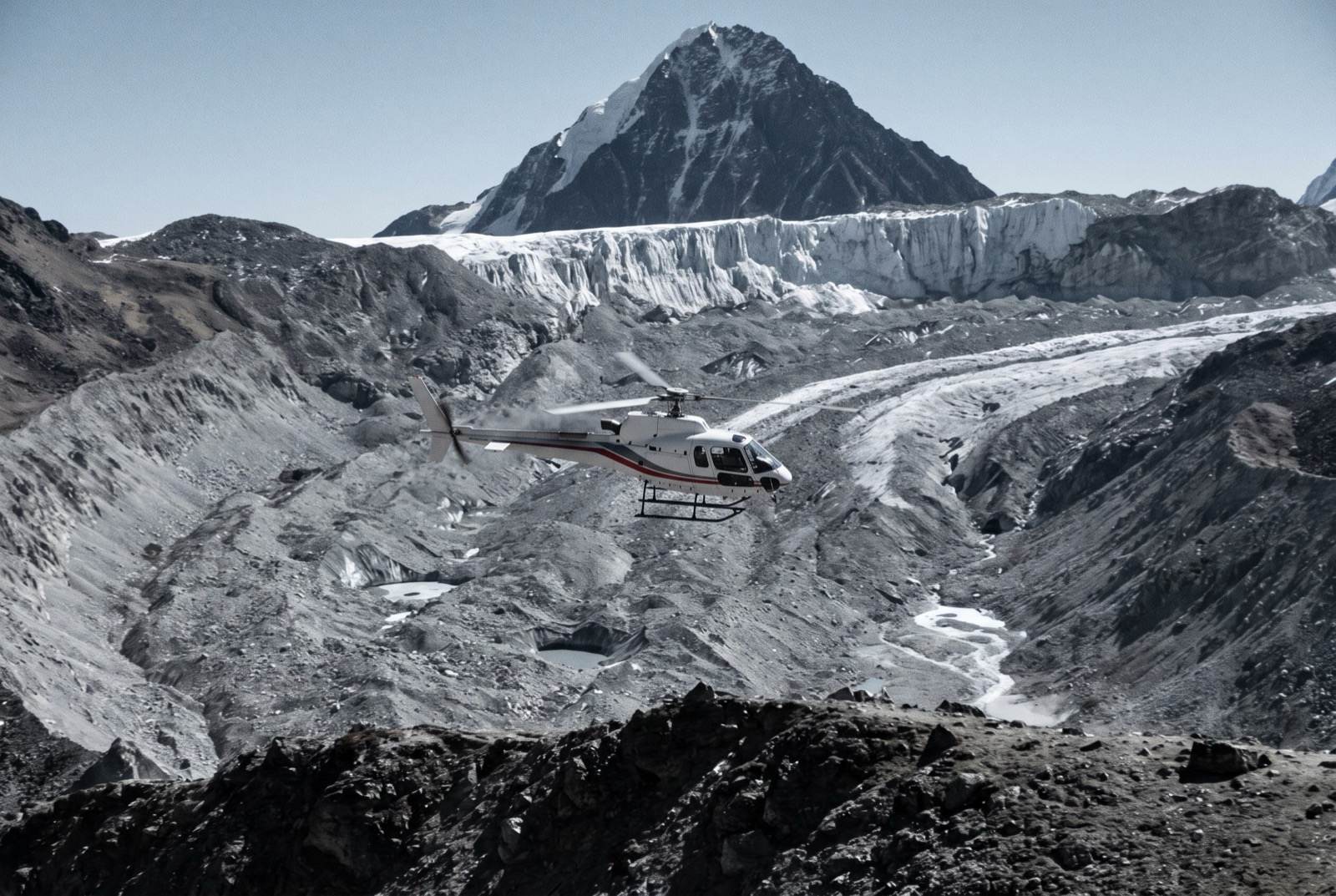
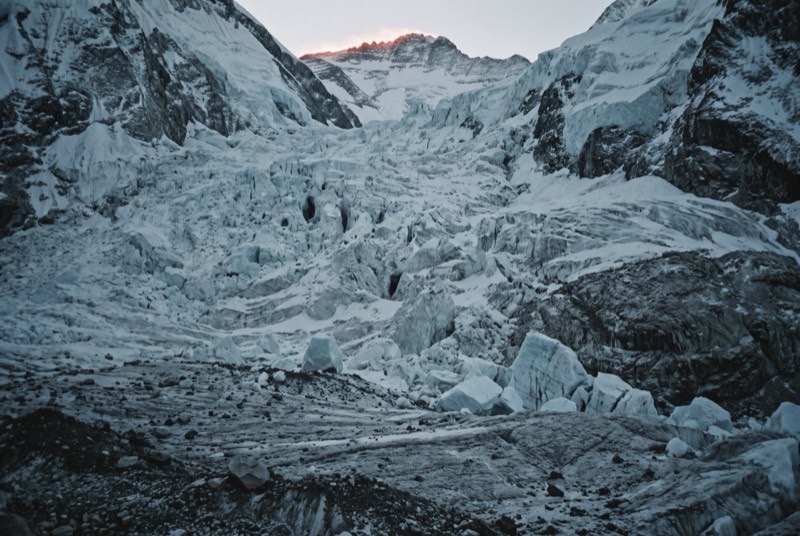
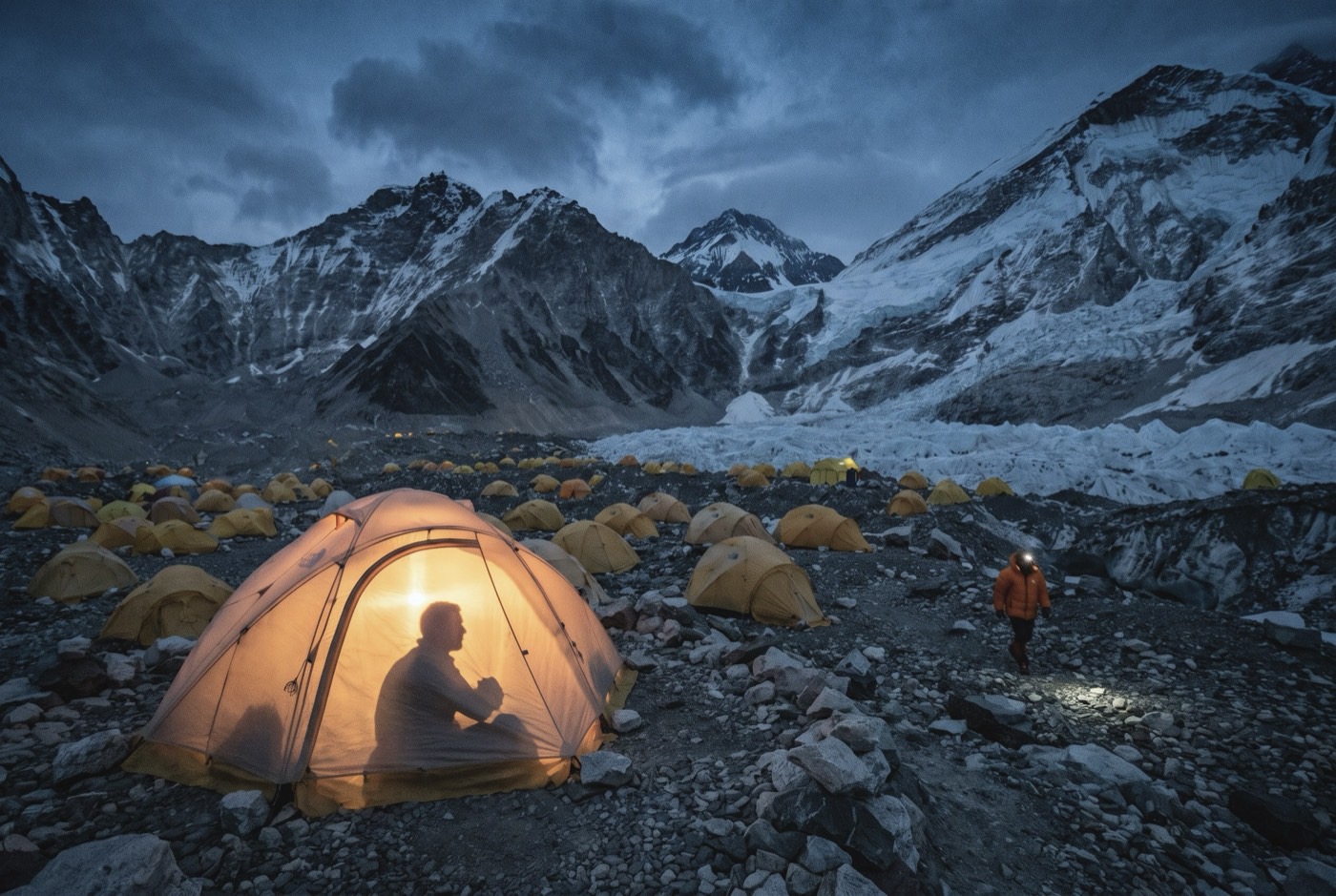
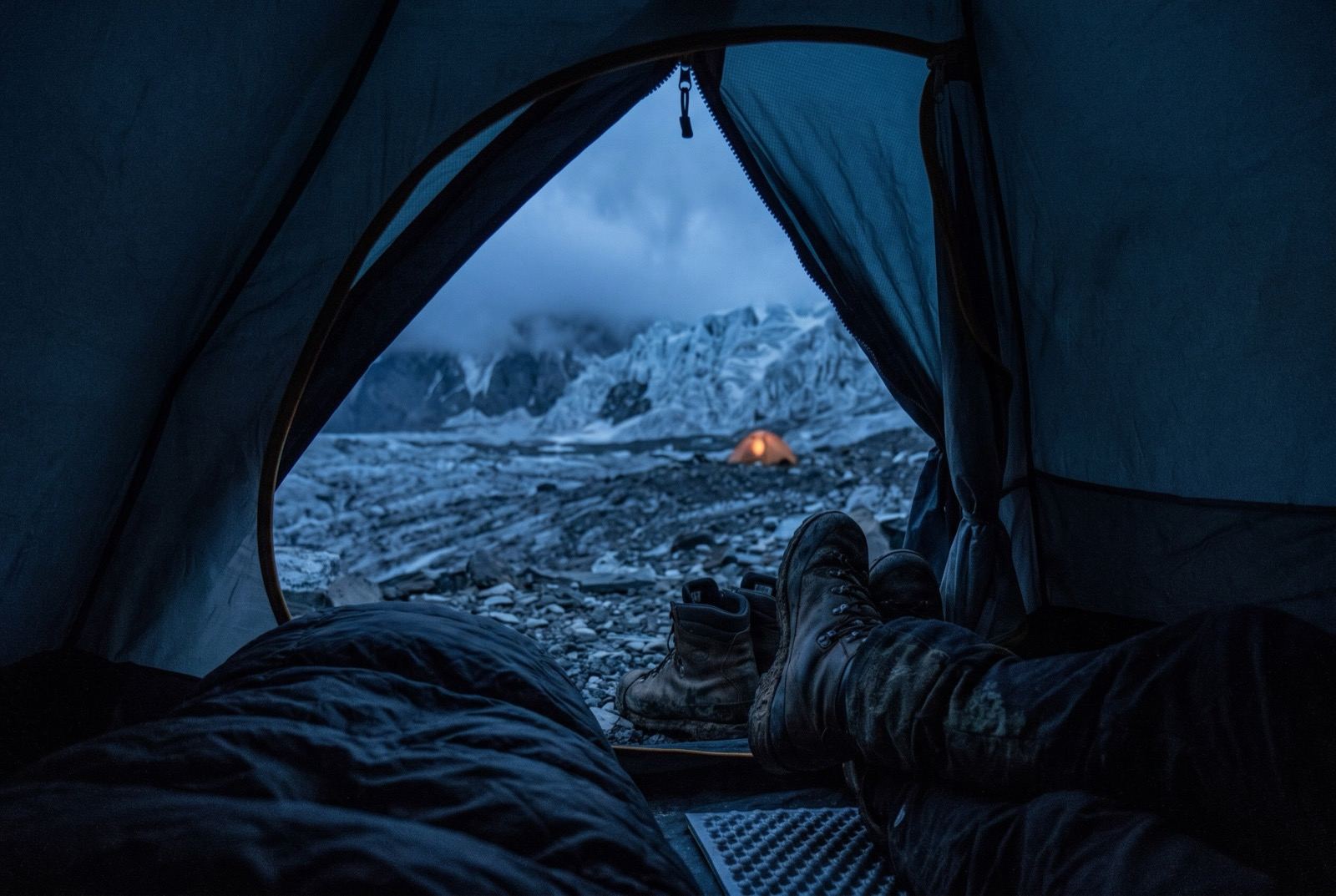
Base Camp is several hundred tents on a glacier that moves underneath you, below an icefall that cracks and resettles all night like something breathing in the next room. Then Kala Patthar at 5,644 m in the dark, and the sun comes over the Tibetan border and lights the top of Everest before it lights anything else on the planet. You will stand there and realise you are actually going to try this.
What it takes out of you
Somewhere around Dingboche you will run out of things to say, you will not have slept properly in a week, and there will be nobody to fix it. Good. That is the appointment you came for.
Write it down at Base Camp. All of it. Every person you burned, every year you cannot account for, every version of the story you have been telling that you know is not the true one. You are further from your own publicist than you have been since you were a teenager, and it will not be this quiet again for a long time.
The logistics
- Duration
- 12–14 days
- Skill required
- Trekking fitness
- Season
- Oct–Nov, Mar–May
The trek profile
Left, elevation only: no horizontal axis, so its width means nothing. Right, air: bar length is the one thing here that does.
- Start
- Lukla, 2,840 msource
- Finish
- Everest Base Camp, 5,364 msource
- Vertical, start to finish
- 2,524 mthe difference of the two elevations above, nothing more
- Horizontal distance
- 65 kmLukla to base camp, one way · source
- Cumulative ascent
- Not yet sourcedThe up-and-down of the whole route, which is more than the vertical above. Nobody publishes it for any of the twelve.
Lukla is quoted at 2,840 m, 2,846 m and 2,850 m by different sources. The same page that gives the 65 km also gives a 2,524 m “total height gained”, which is 5,364 minus 2,840 exactly — the difference relabelled, not cumulative ascent, so it is not recorded as such.
The highest point is Everest Base Camp, 5,364 m, where the air is 53% of what it is at sea level. Everything you carry gets there. The air does not.
The part we will not lie about
Thousands of ordinary people reach Base Camp every season — it is by a distance the most achievable thing on this list. It is also where plenty of people find out they wanted the story rather than the mountain. Finding that out here costs a fortnight. Finding it out on step eleven costs considerably more.
Who you do it with
This is where you write the whole thing down, on a glacier that moves under the tent. Nobody to hand it to, no publicist to take a pass at it first. A dai is the person you can say it out loud to and still be spoken to normally at breakfast.
What the word means, and where it came from$2,400,000 at the plan's pace — $100,000 a month, charged monthly, for as long as it takes. All twelve steps. One client at a time.
Request a call